
.webp) Download Sample
Download Sample
 Schedule a Meeting
.webp) Download Sample
Download Sample
 USA : +1 8044 419344
 sales@towardsautomotive.com
March 2026




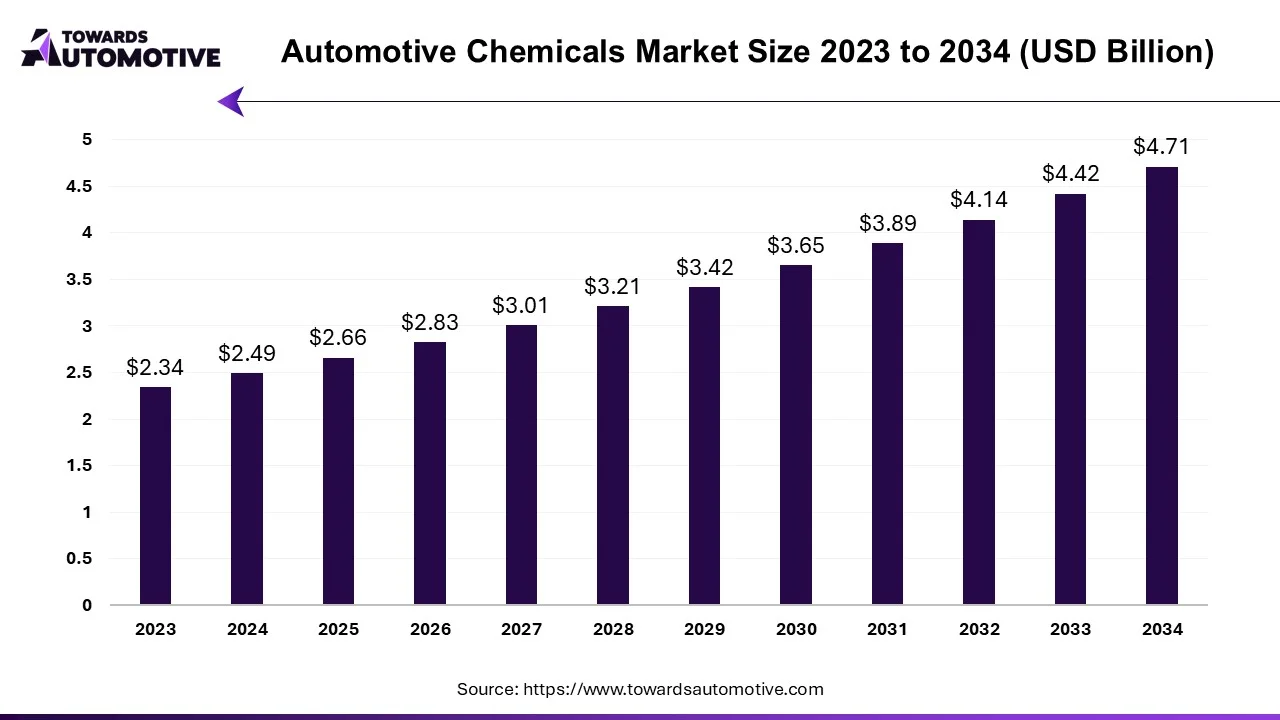
The automotive chemicals market size is forecast to grow from USD 2.66 billion in 2025 to USD 4.71 billion by 2034, driven by a CAGR of 6.64% from 2025 to 2034.
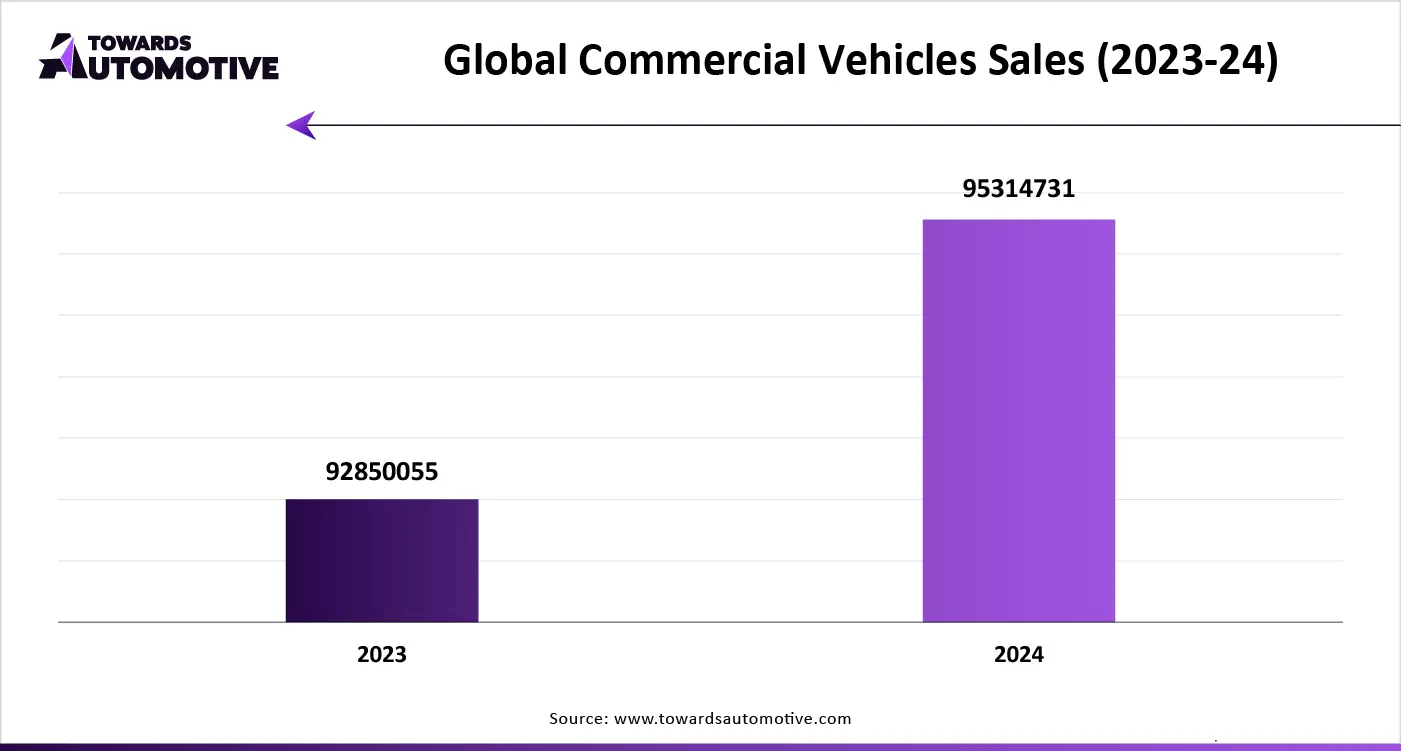
The automotive chemicals market is an integral sector of the advanced chemicals industry. This industry deals in manufacturing and distribution of chemicals for the automotive users. There are several products manufactured in this industry consisting of material plastics, lubricants, coatings, adhesives, maintenance chemicals and some others. These chemicals find several applications in two-wheelers, passenger cars, light commercial vehicles and others. The growing demand for commercial vehicles in different regions has contributed to the industrial expansion. This market is projected to rise significantly with the growth of the automotive industry in different parts of the world.
In July 2024, Caroline Cathelin, global innovation director of advanced polymer solutions at LYB announced that, “We're committed to improve the state of the current technologies to shape the future of automotive interior applications by introducing new solutions to support our customers in addressing the new industry challenges, The Schulamid ET100 line exemplifies this dedication by delivering superior performance through differentiated solutions."
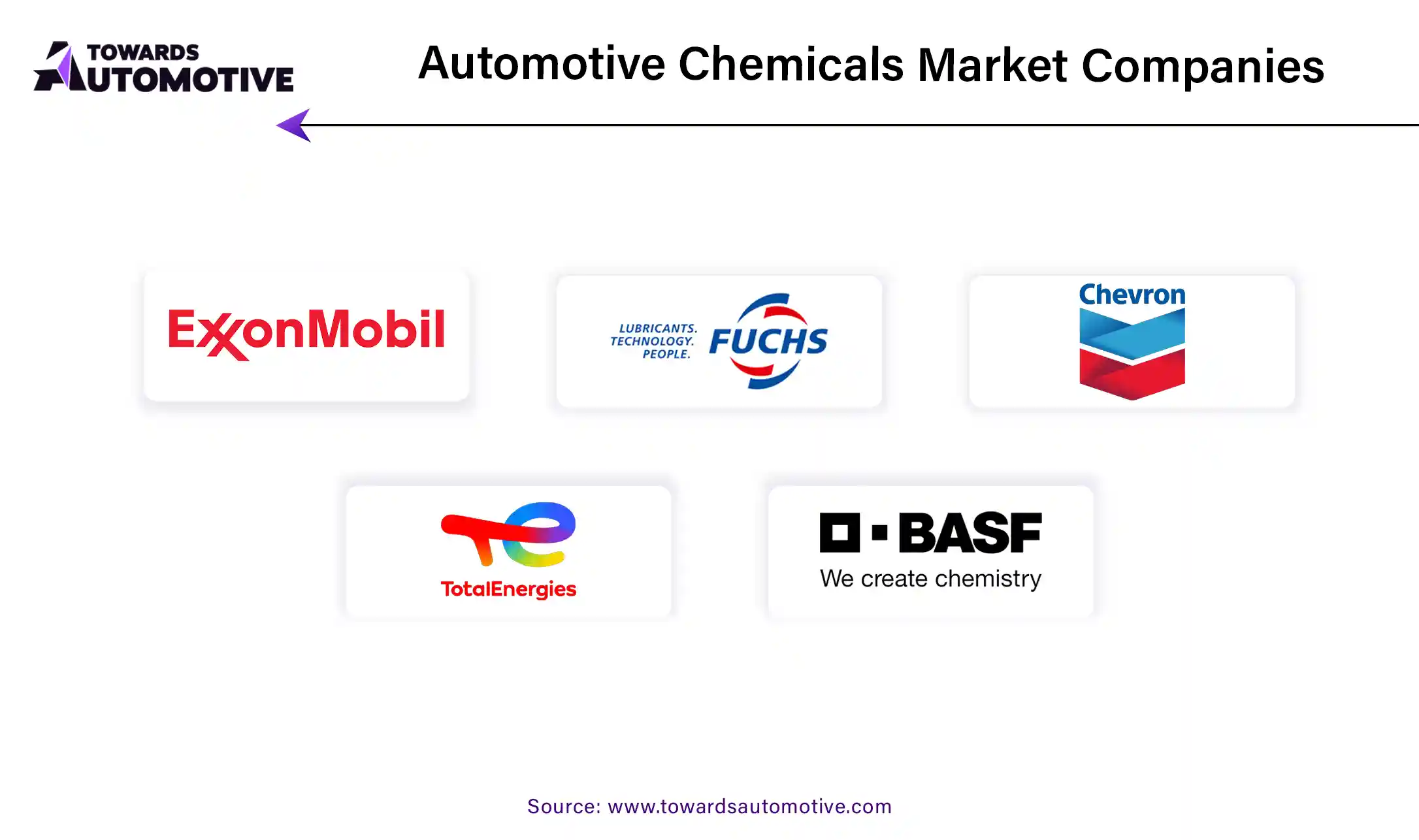
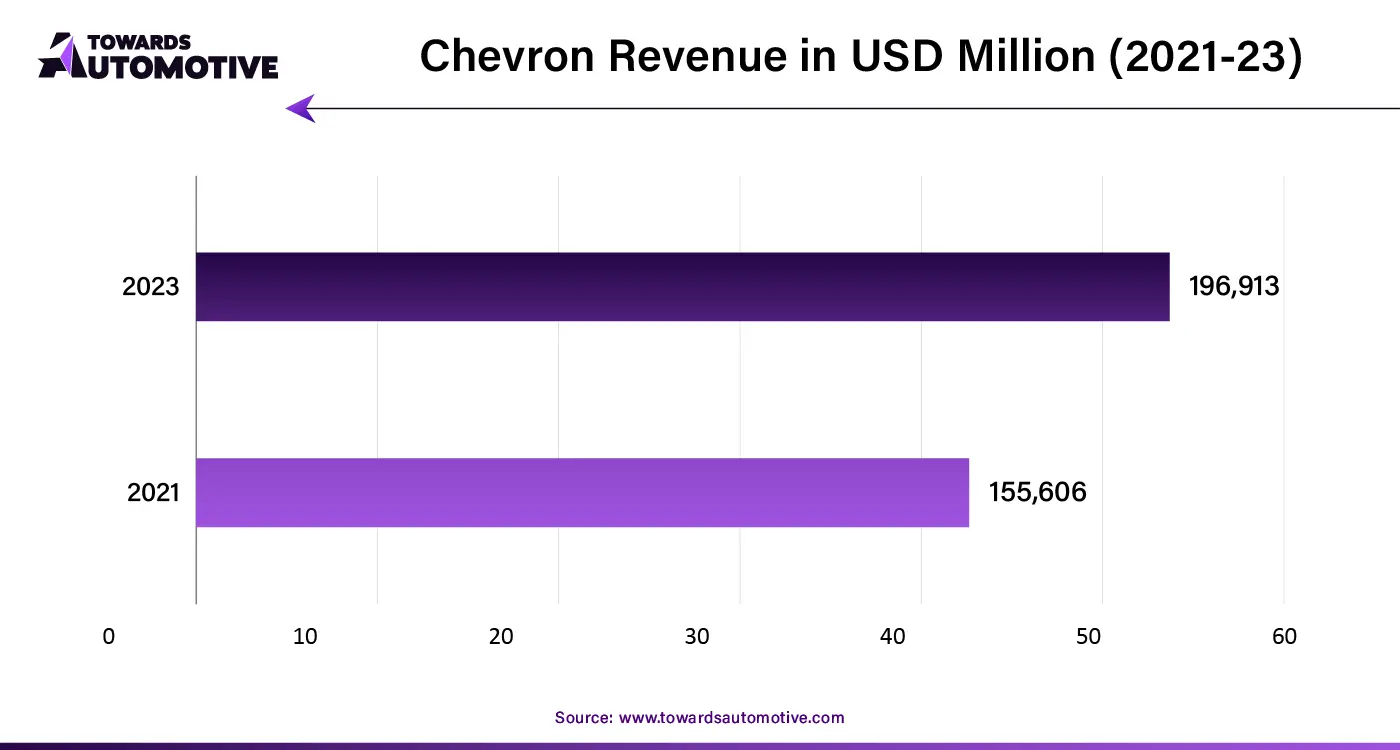
The automotive chemicals market is a matured industry with the presence of numerous dominant players. Some of the important players in this industry comprises of ExxonMobil Corporation, FUCHS Group, Chevron Corporation, TotalEnergies, BASF SE, Royal Dutch Shell plc, and some others. These market players are investing heavily for manufacturing high-grade chemicals for the automotive sector and adopting numerous strategies to maintain their dominant position in this industry.
By Product Type
By Application
By Region



March 2026
March 2026
December 2025
October 2025
We offer automotive expertise for market projections and customizable research, adaptable to diverse strategic approaches.
Contact Us